
The short answer
Transloading describes transferring freight between transport equipment; cross-docking describes moving inbound freight into an outbound movement with limited storage. Palletizing prepares goods on pallets. You do not always have to pick one: a single shipment often uses all three. Describe the incoming load and desired outbound shipment rather than assuming only one label applies.
What each operation solves
| Operation | Question it answers | Example |
|---|---|---|
| Transloading | Does the cargo need to change equipment? | Unload goods from an ocean container and reload them into a domestic truck. |
| Cross-docking | How quickly can inbound goods move into the outbound shipment? | Receive freight at a dock and stage it for an outbound LTL or FTL movement, without long-term storage. |
| Palletizing | Do the goods need preparation on pallets? | Stack loose, floor-loaded cartons on pallets and shrink-wrap them so they can be moved by forklift. |
Tip: loose boxes arriving in a container may be transloaded into a truck, palletized for safe handling and cross-docked onto an outbound Florida shipment. Storage duration, materials, timing and exact handling must be agreed for the shipment.
Describe the result you need
- What is arriving: a container, trailer or box truck; floor-loaded, crated or already palletized; with cargo and packaging details.
- Preparation needed: sorting, palletizing, shrink-wrapping, labeling or separation into different outbound loads.
- Outbound details: the Florida destination, such as Miami, Orlando or Jacksonville, the receiving business and how the cargo should leave.
- Timing and storage: an immediate dock-to-dock transfer or temporary staging before pickup, and any deadline. Ask which handling can be accommodated.
A container-to-truck scenario
Imported goods arrive at an agreed Los Angeles receiving facility and need to move by truck to a distribution center in Miami:
- Arrival: the goods arrive as loose boxes, floor-loaded in an ocean container.
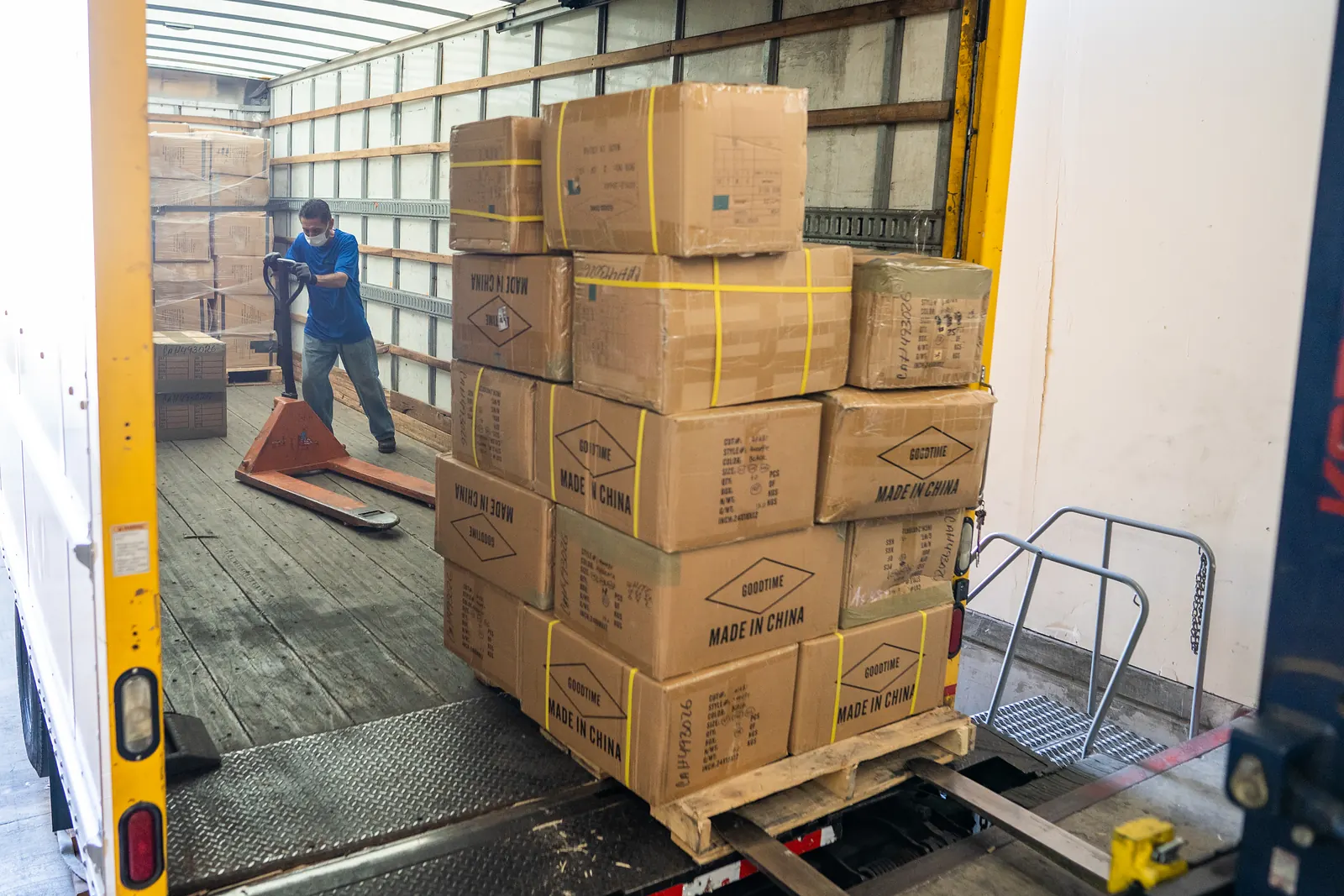
- Palletizing: the boxes are unloaded, stacked on pallets and shrink-wrapped for domestic transport.
- Transloading and cross-docking: the pallets move across the dock into a truck bound for South Florida, without long-term storage.
This example does not imply Pelham collects at the port or handles customs.
What to confirm before dispatch
- Appointments: receiving and pickup times at the transfer facility.
- Materials: if palletizing is needed, the pallet size (for example, 48 × 40 in) and wrapping.
- Charges: labor, pallet materials, handling and which services are included.
- Outbound details: final pallet count and total weight, outbound capacity, receiving business and delivery requirements.
Discuss the handling arrangement
Check the container transloading requirements, then request a handling quote. Pelham offers cross-docking, transloading and palletizing for domestic trucking; international transport, rail and direct port service are outside its offer.